Research

Understanding earthquake shaking from the ground up

Local soil and rock conditions can amplify or reduce earthquake shaking. My work asks when simple one-dimensional models are good enough, and builds the multi-dimensional models and field datasets needed when they are not.

Bryce Canyon, Utah · captured by yours truly

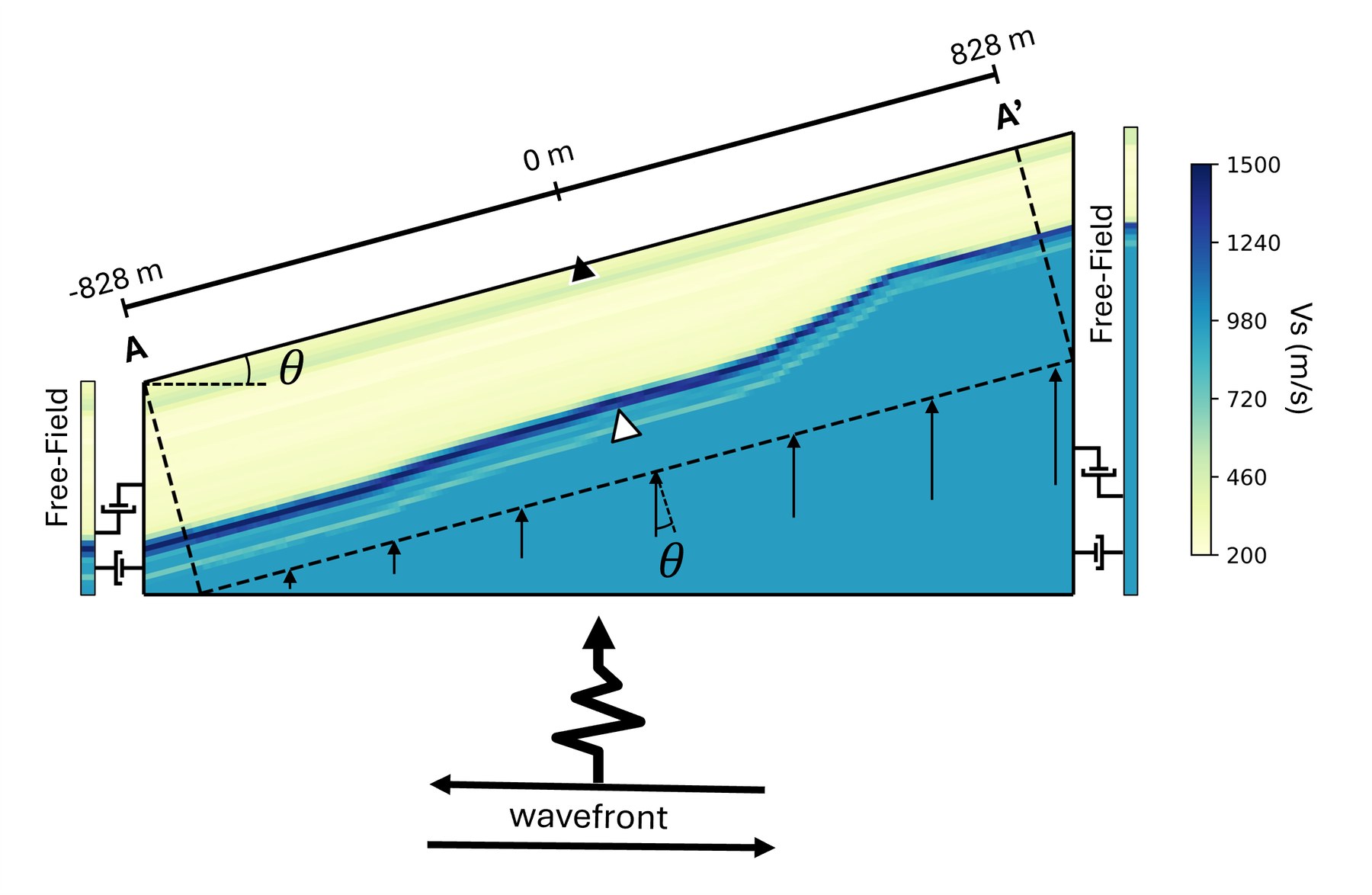
2D Vs model at Delaney Park with an inclined wavefront
2D shear-wave velocity cross-section at the Delaney Park downhole array, Anchorage, with an inclined incoming wavefront.

Multi-dimensional site response

I develop large-scale 2D and 3D numerical site response models at downhole array sites, where earthquakes are recorded both at the surface and at depth. These recordings let us test model predictions directly against what the ground actually did.

Recent work examines how the inclination and azimuth of incoming waves change the predicted response, and how much 3D subsurface variability matters compared with 1D analyses.
Rayleigh damping curves
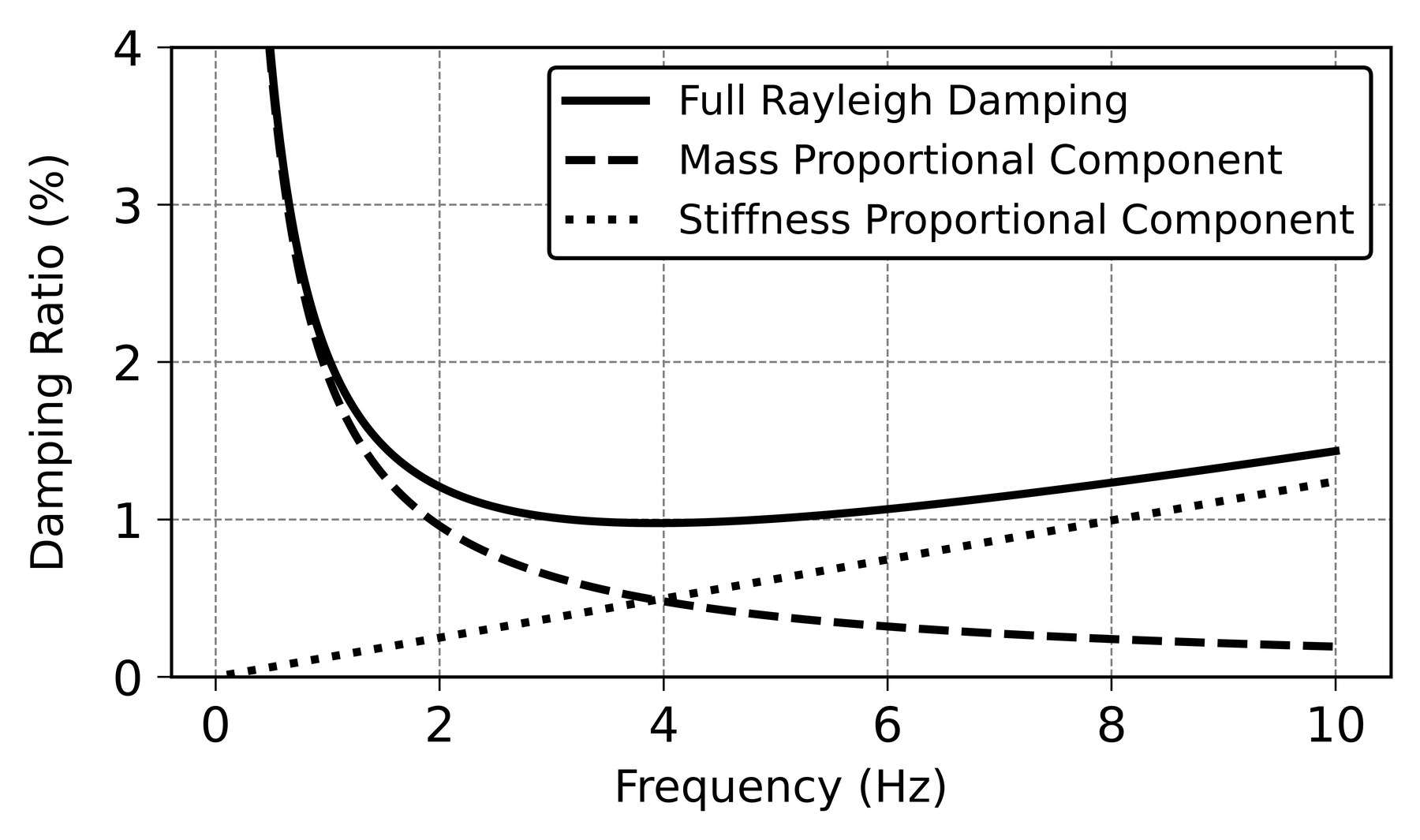
Frequency dependence of full Rayleigh damping and its mass- and stiffness-proportional components.

Numerical damping formulations

Every numerical site response model needs a way to represent energy loss in soil. Different damping formulations can give noticeably different answers.

By calibrating 2D models against recorded ground motions, I evaluate which formulations best reproduce small-strain site response, with results published in Earthquake Spectra and at ICSMGE 2026.

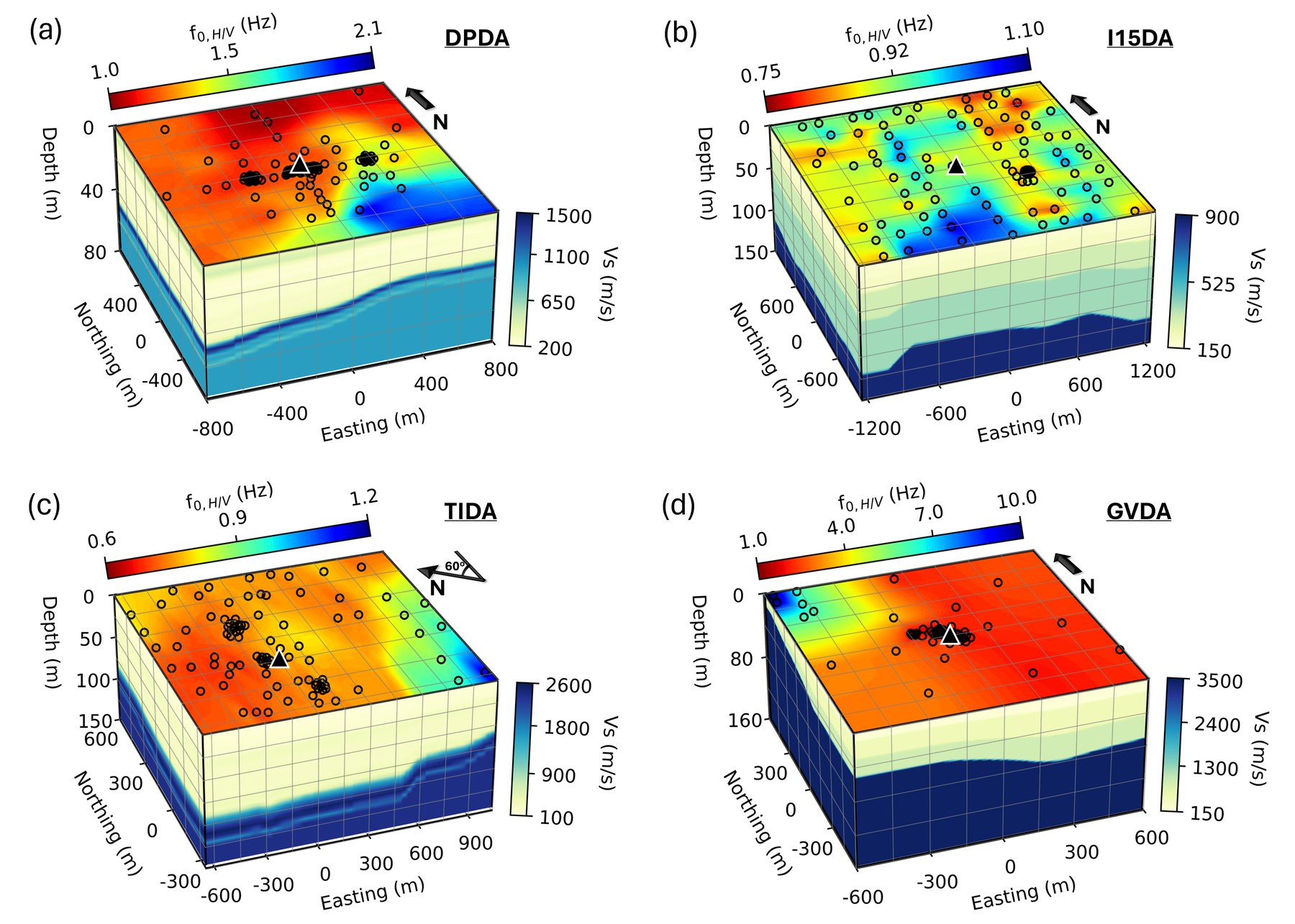
3D Vs models at four downhole arrays
3D Vs models at four downhole arrays (Delaney Park, I-15, Treasure Island and Garner Valley), built from distributed HVSR measurements.

3D subsurface velocity models

Multi-dimensional models are only as good as the subsurface model beneath them. I build large-scale 3D shear-wave velocity models by combining spatially distributed horizontal-to-vertical spectral ratio (HVSR) measurements with geostatistical kriging.

These models support the 3D analyses at the I-15 array, where we also recorded aftershocks of the 2020 M5.7 Magna, Utah earthquake.

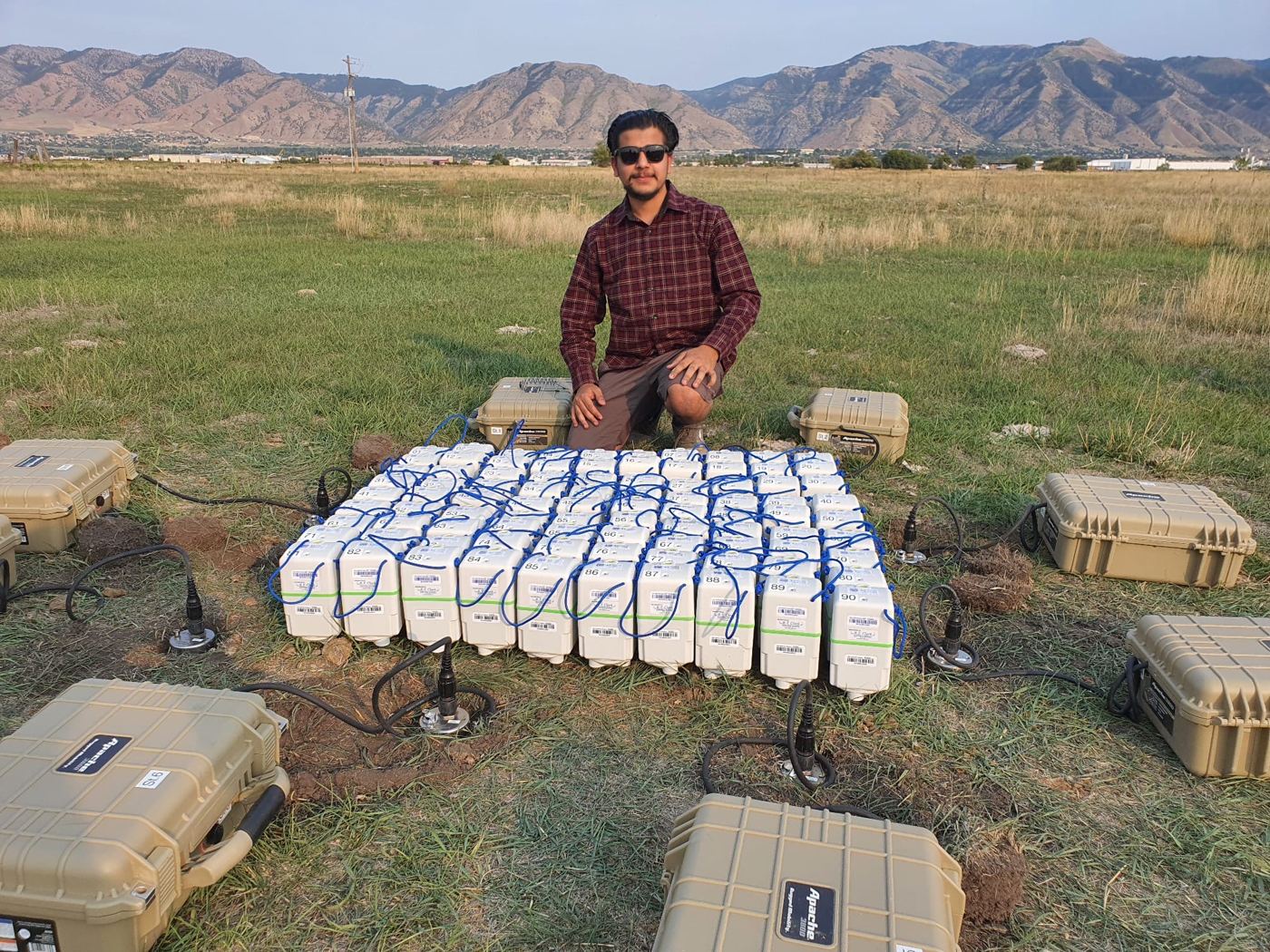
Nishkarsha with a dense array of nodal seismometers
Getting a dense array of nodal seismometers ready for deployment.

Geophysical site characterization

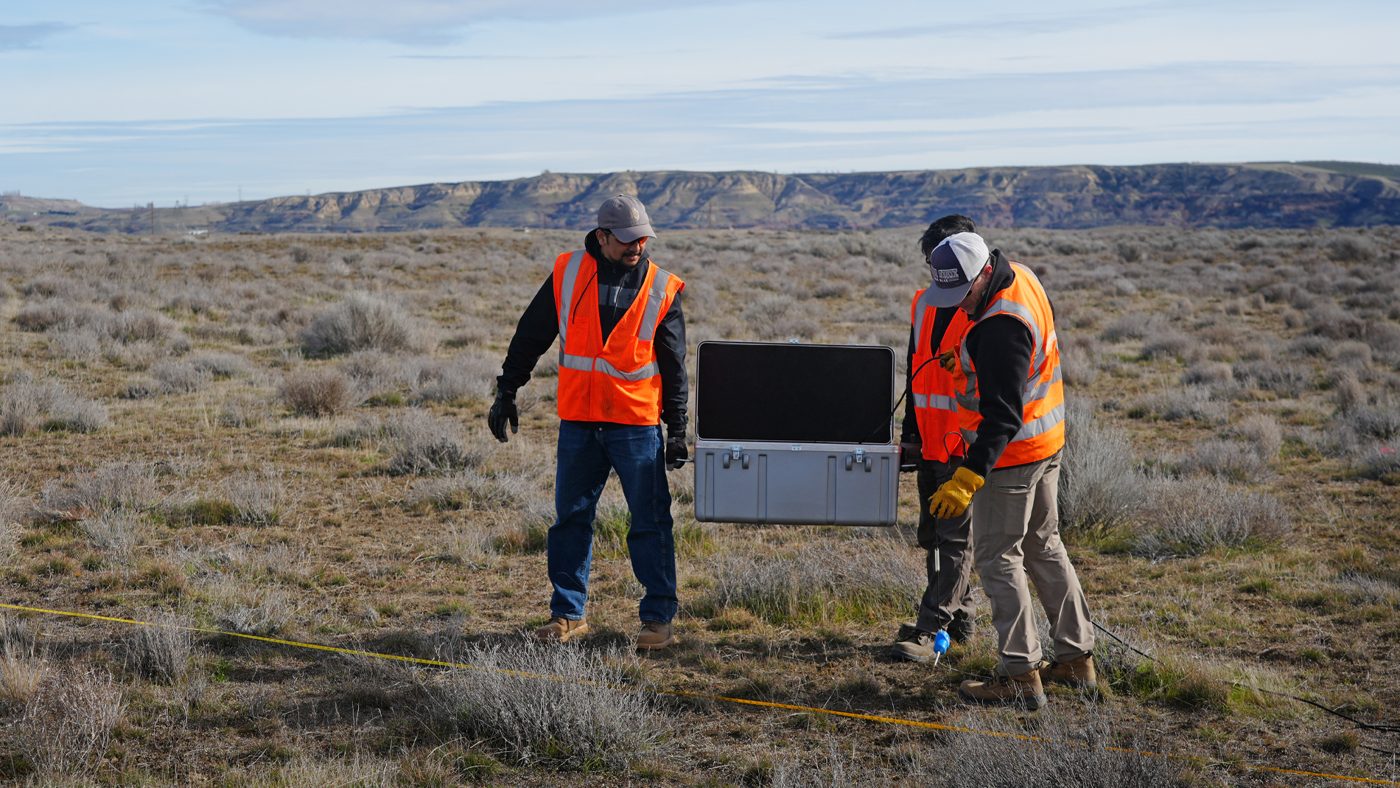
Field data are at the heart of my work. I develop deep shear-wave velocity profiles (to roughly 1 km) using active- and passive-source surface-wave methods (MASW and MAM), including NQA-1-compliant studies for nuclear power facilities in Washington, Michigan, and Wyoming.

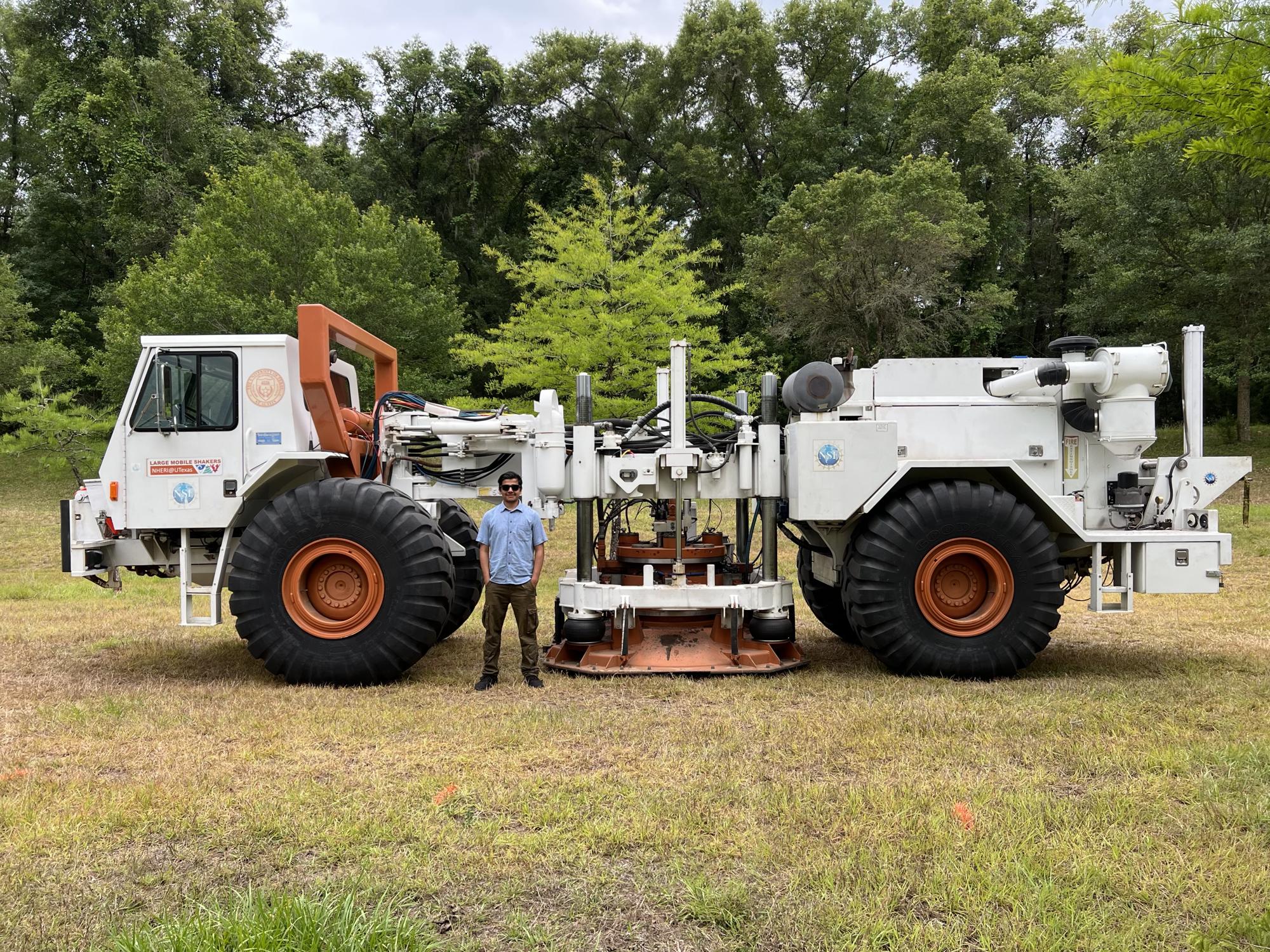
I also helped run a large subsurface imaging experiment in Newberry, Florida, using about 2 km of DAS cable alongside nodal seismometers, and the resulting datasets are openly available on DesignSafe.

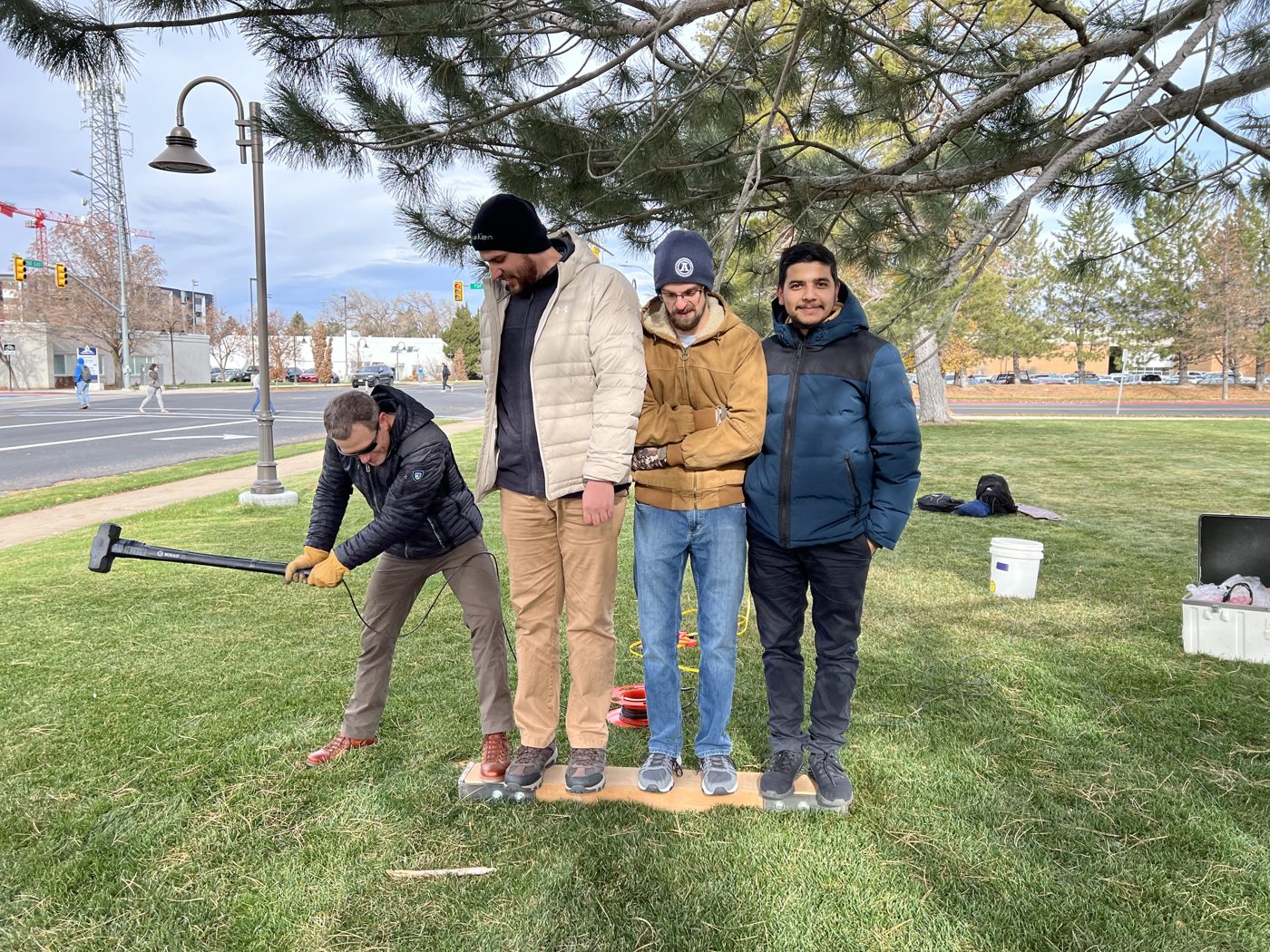
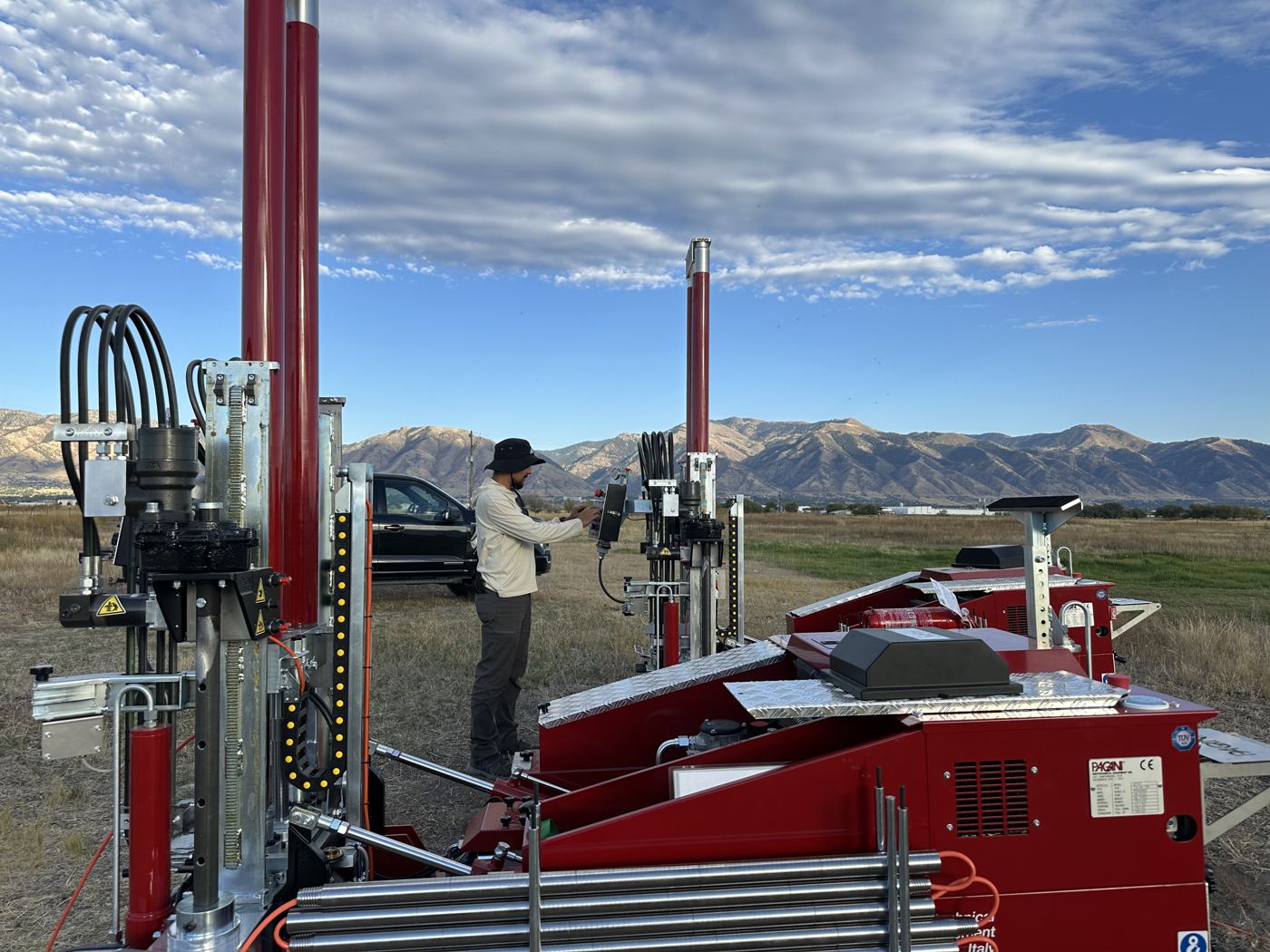
In the field

Figures on this page are from my published work (Dawadi et al. 2026; Dawadi & Cox 2026).